


Reviving Heritage Through Young People: The Arise Youth Festival in Oro Province

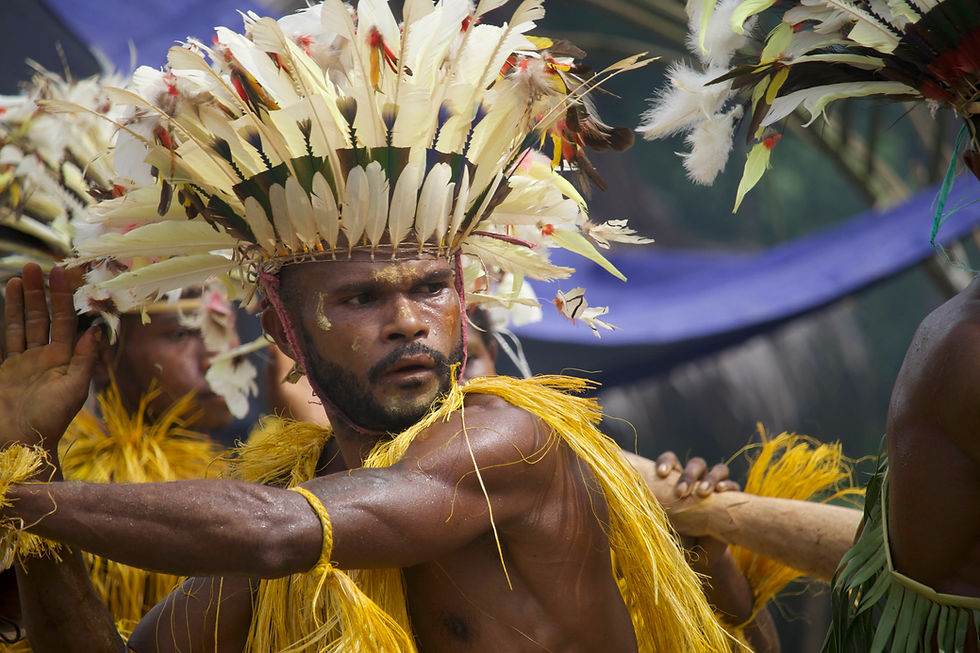
Papua New Guinea is home to over 800 languages and a kaleidoscope of cultures, yet modern pressures—from foreign media influence to economic marginalisation—threaten the survival of this rich ancestral knowledge. In response, a wave of youth-led cultural revival is sweeping through the country, sparked by one inspiring initiative: the Arise Youth Project. This ground breaking effort, led by SAVE PNG and its Executive Director Bao Waiko, has laid the foundation for Arise Youth Festival in Oro Province—an ambitious, youth-driven movement set to empower young people through digital literacy, performing arts and cultural pride.
This landmark event celebrated the preservation and promotion of indigenous performing arts, cultural exchange, and digital storytelling. It was made possible through the generous support of the African, Caribbean and Pacific Group of States (ACP) and the European Union (EU), under the ACP-EU Culture Programme, with technical and funding assistance coordinated by The Pacific Community (SPC). Their backing enabled the delivery of inclusive peer education, media training, and traditional knowledge revitalisation that empowered over 1,000 rural participants to become cultural leaders and creative entrepreneurs in their communities.
At the heart of this movement is the local communities of Morobe and Oro Provinces, where young participants recently took part in documenting and performing their traditional dances—a striking combination of drama, drum beats, theatre, and motif art unique to their heritage. Far from a passive cultural exercise, this work symbolises a resistance against rising crime, disconnection, and digital exclusion among PNG’s youth.
“The Arise Youth initiative was never just about documenting customs,” Waiko explains. “It’s about bridging generations—using digital tools to inspire a new sense of purpose among young people, particularly those who are most marginalised, including women and persons living with disabilities. We’re proving that culture can be a driver for change, not just tradition for nostalgia.”

Indeed, young Morobean and Orokaivain youth didn’t just perform in front of the camera—they were behind it, trained as peer media producers and storytellers. With mentorship from Save PNG’s team and church partners, these youths captured their community’s heritage on camera, learning valuable skills in video production, visual literacy, and cultural communication.
The Arise Youth Festival—building on this foundation—brought together 110 peer educators from across Morobe and Oro Provinces, who directly shared cultural knowledge and filmmaking skills working with 1,000 rural youth during a one-week cultural exchange festival in May 2025. The program, rooted in four strands of the PNG National Culture Policy and supported by the National Cultural Commission, aims to expand the festival to include more communities across Papua New Guinea and beyond.
SAVE PNG’s approach is unique: it doesn’t see youth as mere recipients of aid but as game-changers and cultural entrepreneurs. Through peer-to-peer education, performing arts training, and the use of digital media, youth are enabled to create livelihoods rooted in cultural expression. “With smartphones and solar-powered media kits, our youth can turn storytelling into self-employment,” Waiko notes. “They can document sacred dances, record oral histories, promote eco-tourism, and sell digital content—all while reinforcing their identity and community cohesion.”
The success of this mini-festival highlights the need for participants to develop stronger social values, reduce risky behaviours, and build viable pathways into creative micro-enterprise—goals that resonate with the broader mission of the Regional Pacific Strategy 2022-2030 plan.
The Arise Youth Festival model prioritises inclusivity, intergenerational dialogue, and innovation. The festival featured not just performances but training workshops in social media marketing, storytelling ethics, traditional costume design, and inclusive video journalism. Importantly, the program also includes elders, recognising their role as cultural custodians and mentors in the re-education of young minds.
What makes the Binandere documentation especially poignant is the contrast it highlights: though culturally rich, rural youth often face isolation, lack of access to technology, and high unemployment. By flipping the narrative—showcasing culture not as backward but as a viable path to prosperity—the initiative reclaims pride in identity while opening digital doors.
And the results are already visible.
In the words of one youth peer educator from Tamata LLG of Sohe District: “We used to think TikTok and YouTube were only for outside people. Now we’re on it, showing our cultures, our stories. People are watching and learning who we are.”

The Festival also reveals the spiritual dimension of culture—where each paint stroke, drum rhythm, and dance step embodies cosmologies passed down through bloodlines. For many elders, seeing this knowledge revitalised through youth-led media has brought healing and hope.
In essence, the Arise Youth Festival is a modern-day renaissance of Melanesian heritage. It is a counter-narrative to the disempowerment of PNG’s rural youth, transforming culture into capital—not just for economic gain, but for dignity, identity, and peacebuilding.
As SAVE PNG continues the ‘Arise Youth’ movement it stands as a reminder: the future of our past lies not in museums or textbooks, but in the hands of empowered young people. With a camera in one hand and tradition in the other, they are rewriting PNG’s story—one dance, one beat, one voice at a time.


Comments